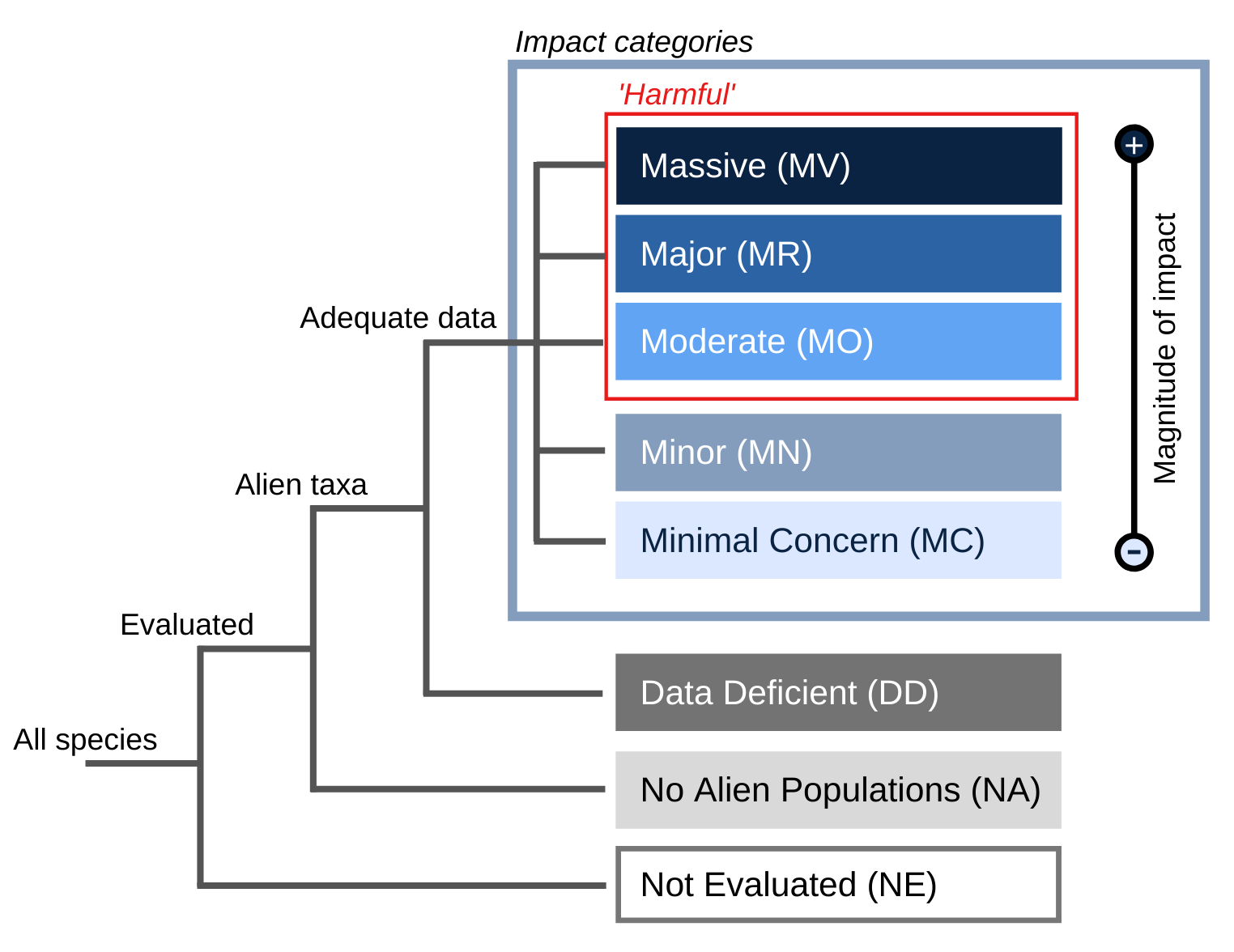
• Not Evaluated
    NE
  • No Alien Population
    NA
  • Data Deficient
    DD
  • Minimal Concern
    MC
  • Minor
    MN
  • Moderate
    MO
  • Major
    MR
  • Massive
    MV
  • General
  • Distribution
  • Impact
  • Management
  • Bibliography
  • Contact
Common name
Japanese Aglaja (English)
Synonym
Aglaja ezoensis ,Baba, 1957
Similar species
Summary

Principal source:

Compiler:

Review:

Publication date:

Recommended citation: Global Invasive Species Database (2026) Species profile: Melanochlamys ezoensis. Downloaded from http://iucngisd.org/gisd/speciesname/Melanochlamys+ezoensis on 23-11-2026.

Countries (or multi-country features) with distribution records for Melanochlamys ezoensis
ALIEN RANGE
NATIVE RANGE
Informations on Melanochlamys ezoensis has been recorded for the following locations. Click on the name for additional informations.
Lorem Ipsum
Location Status Invasiveness Occurrence Source
Details of Melanochlamys ezoensis in information
Status
Invasiveness
Arrival date
Occurrence
Source
Introduction
Species notes for this location
Location note
Management notes for this location
Impact
Mechanism:
Outcome:
Ecosystem services:
Impact information
Red List assessed species 0:
Locations
UNITED STATES
Mechanism
[1] Competition
Management information
Bibliography
1 references found for Melanochlamys ezoensis

Management information
General information
Cooke S, Hanson D, Hirano Y, Ornelas-Gatdula E, Gosliner TM, Chernyshev A, Valdés Á (2014) Cryptic diversity of Melanochlamys sea slugs (Gastropoda, Aglajidae) in the North Pacific. Zoologica Scripta 43: 351-369.
Contact
The following 0 contacts offer information an advice on Melanochlamys ezoensis
DD
Melanochlamys ezoensis
Japanese Aglaja
Date assessed
2023-09-26
Year published
Eicat category
DD (Data Deficient)
Justification for EICAT assessment


Cooke et al. (2014) suggest M. ezoensis is now more abundant in the central and South Bays than the native M. diomedea. Melanochlamys ezoensis may compete with the native species, but as of 2008 surveys M. diomedea was still present. DD was assigned because there was no impact studied.
Confidence rating
Mechanism(s) of maximum impact
Competition
Countries of most severe impact
U.S.A.
Description of impacts
Melanochlamys ezoensis is of concern due to its increasing numbers in the San Francisco Bay which could lead to competition and reduction of fitness of the native species; however, no impact was directly studied.
Assessor
Amy Henry
Contributors
Cascade Sorte
Reviewers
EICAT authority
Recommended citation
Amy Henry (2026). Melanochlamys ezoensis. IUCN Environmental Impact Classification for Alien Taxa (EICAT).